
Hard Landscaping and Groundworks
Built to last.
Patios, driveways, walls and steps, and the groundworks underneath them: excavation, levels, drainage and bases done properly.
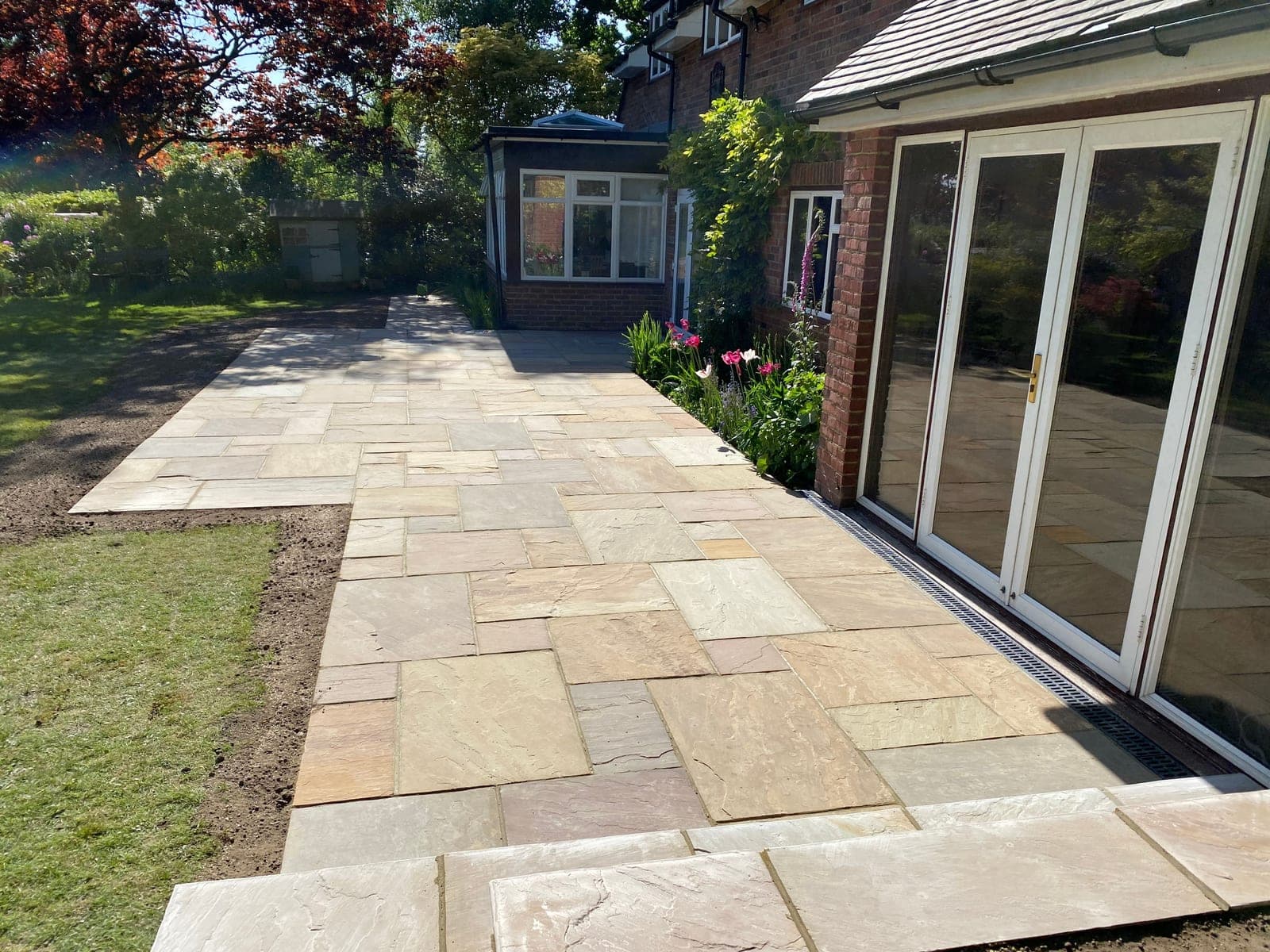
What we do
The part you cannot see is the part that matters.
Sunken paving, standing water and cracked pointing almost always come from what was under the surface, not the surface itself.
We dig out to depth, deal with levels and drainage, and build up in proper layers to increase longevity.
We discuss the different material options with our clients to match their budget, and carry out the work from start to finish whilst keeping a safe and tidy site.
What is covered
Construction and groundworks we take on.
New builds and replacements for homes, gardens and grounds.
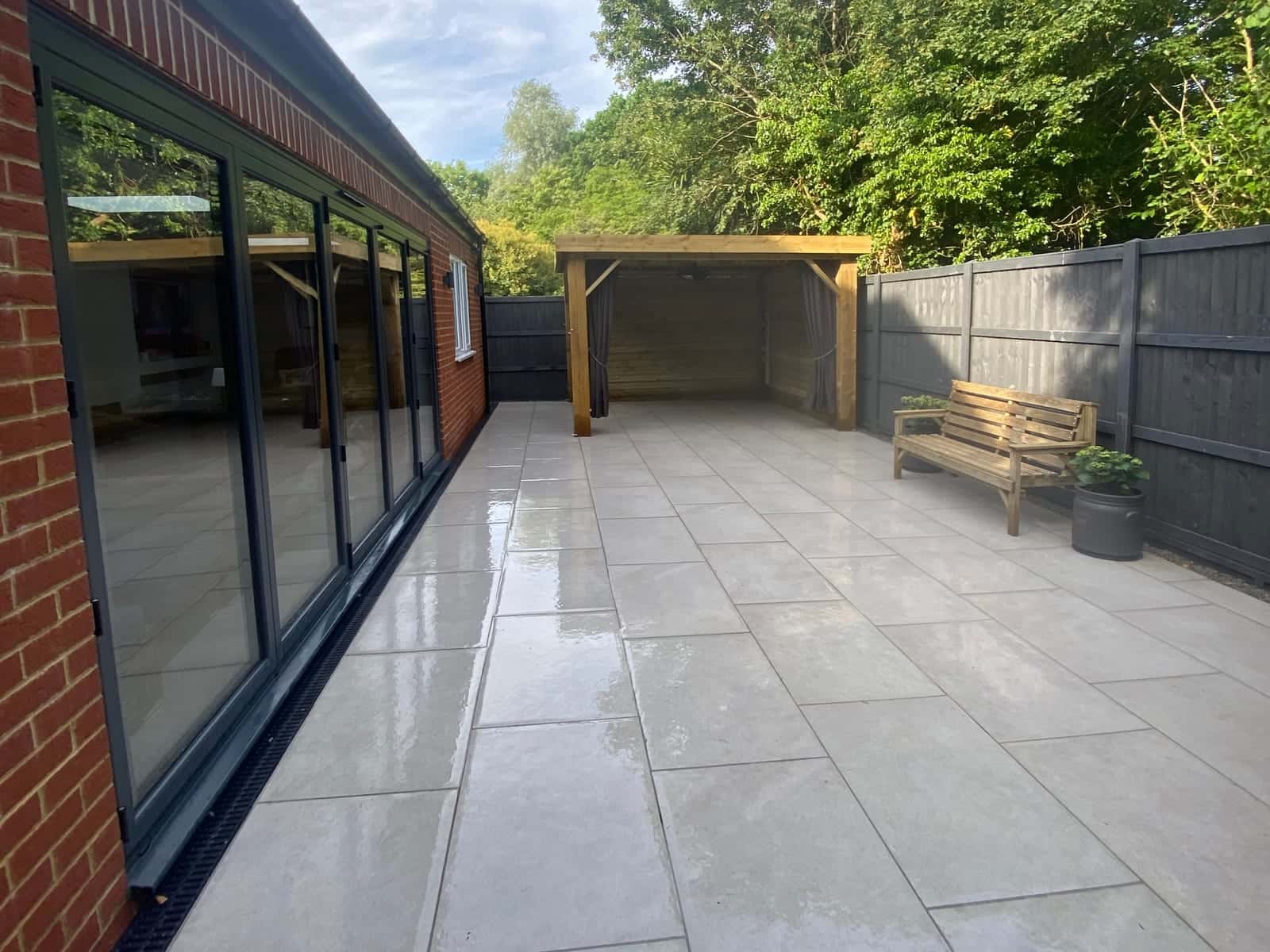
Patios and paving
Sandstone, porcelain, block and slab.
Laid to fall so water runs off.
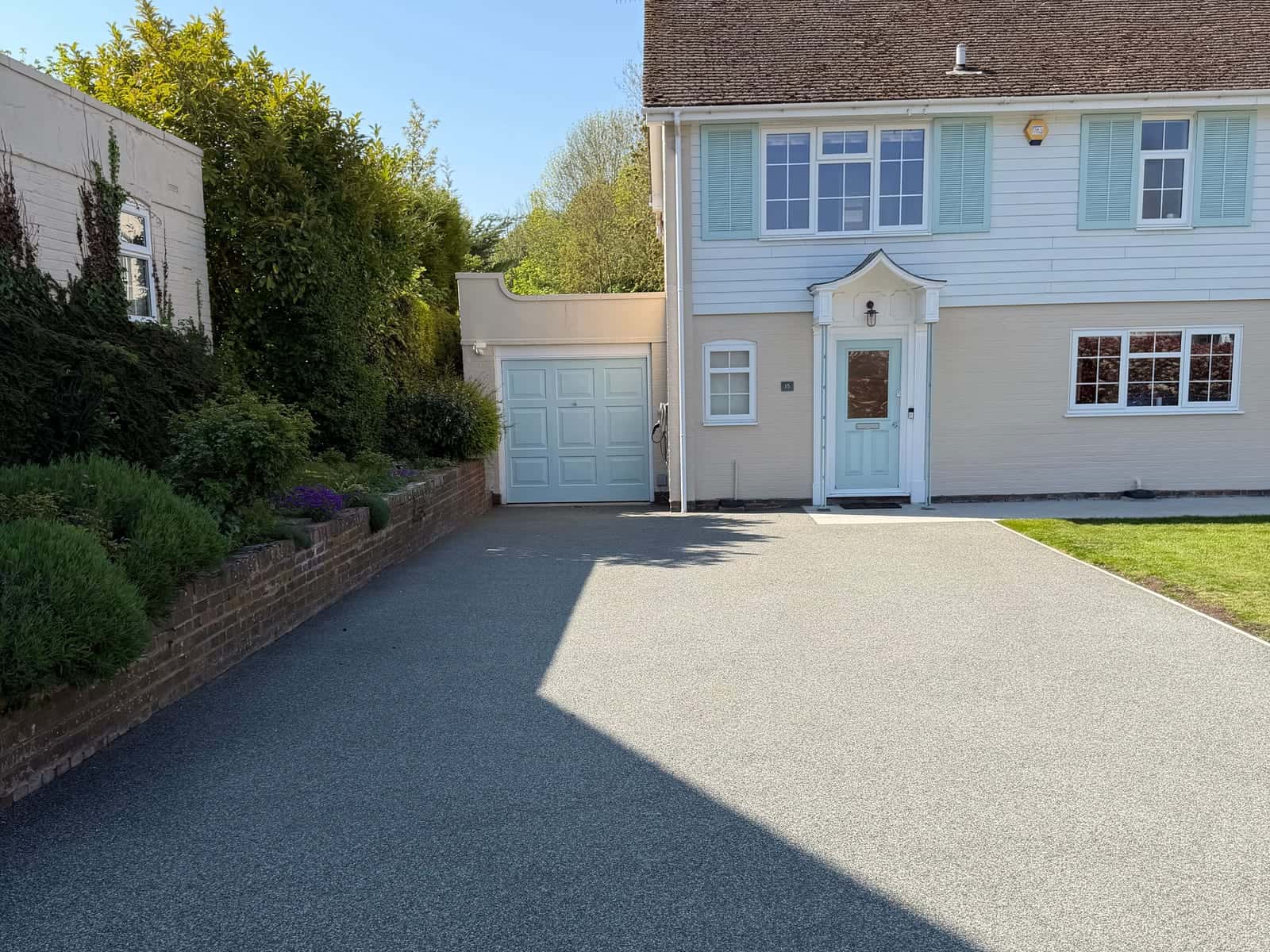
Driveways
New and replacement driveways.
Excavation, sub-base and drainage done first.
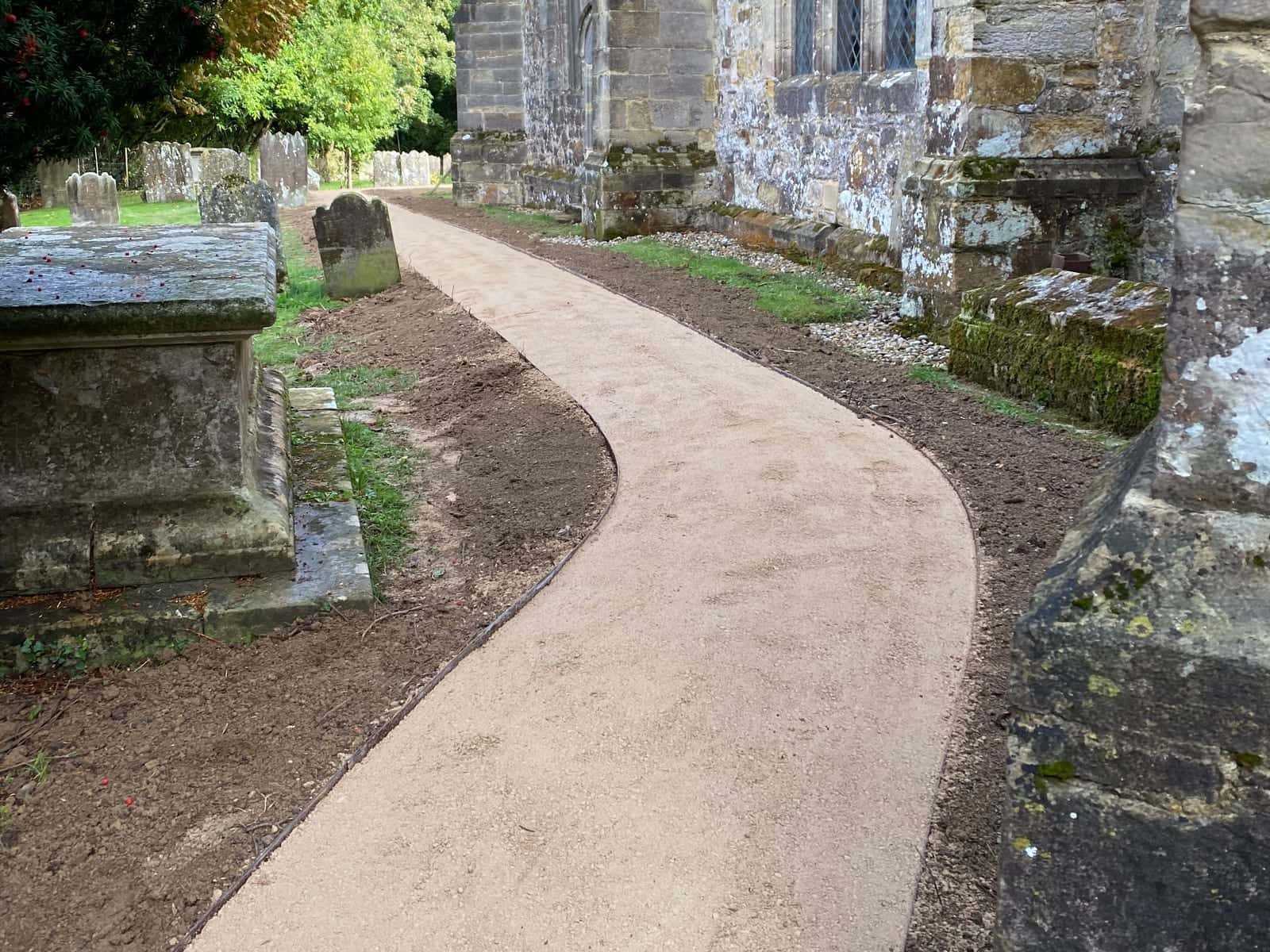
Paths and access
Garden paths and utility routes.
Edged to stop spread.
Retaining walls
Brick, block and sleeper.
Built to hold the ground behind them.
Steps and level changes
Sloping plots made usable.
Consistent rise across the flight.
Groundworks and levels
Dig out, muck away and build up.
Sets everything that follows.
Site preparation
Ground cleared and reduced ready to build on.
Spoil taken away or reused on site.
Drainage
Channel drains, soakaways and falls.
Water taken away from the house.
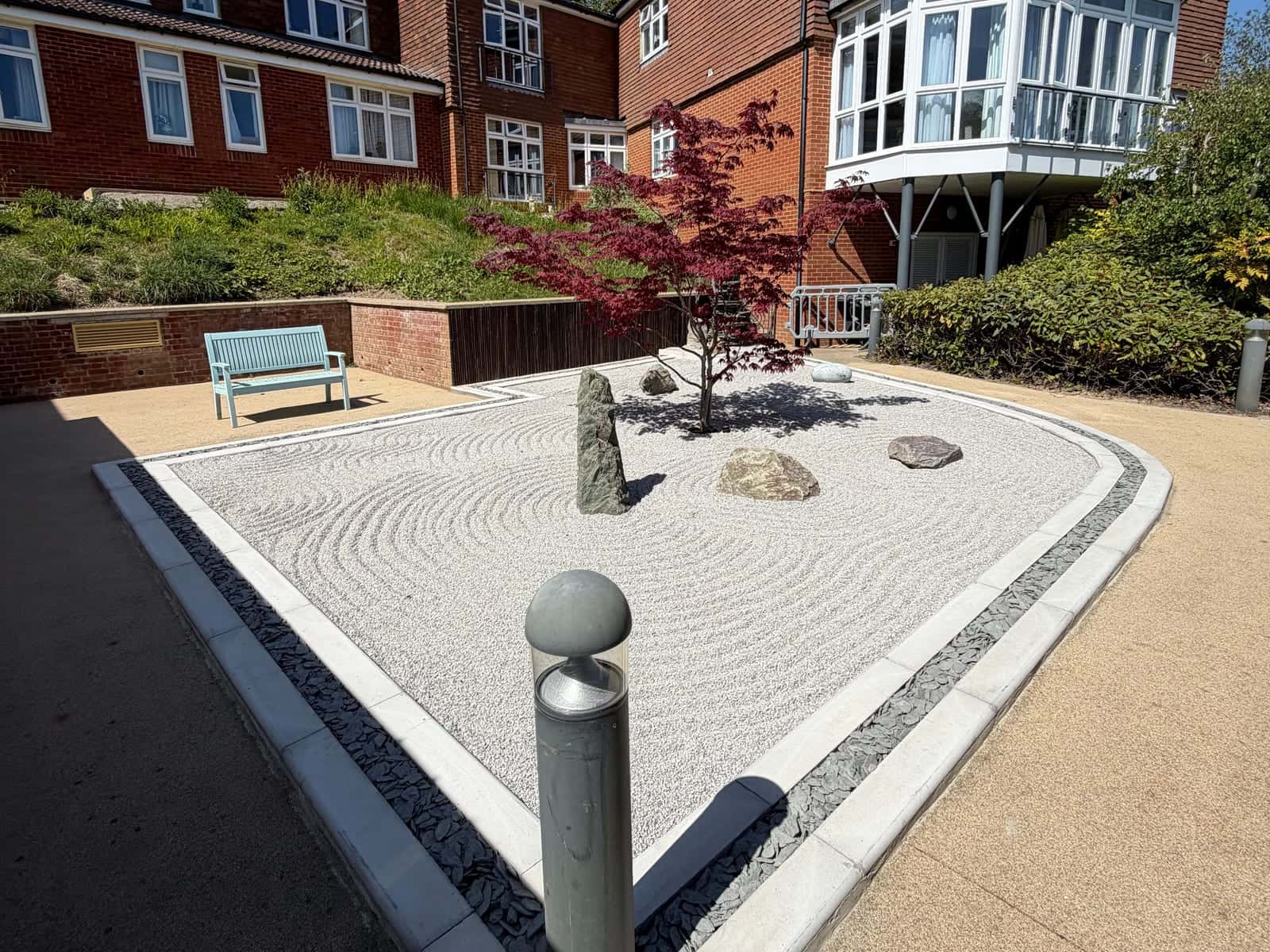
Edging and kerbing
Clean separation between hard and soft.
Keeps gravel and beds where they belong.
Bases and foundations
Bases for buildings, bins and hot tubs.
Sized to what is going on top.
Recent work
Construction across Kent and East Sussex.
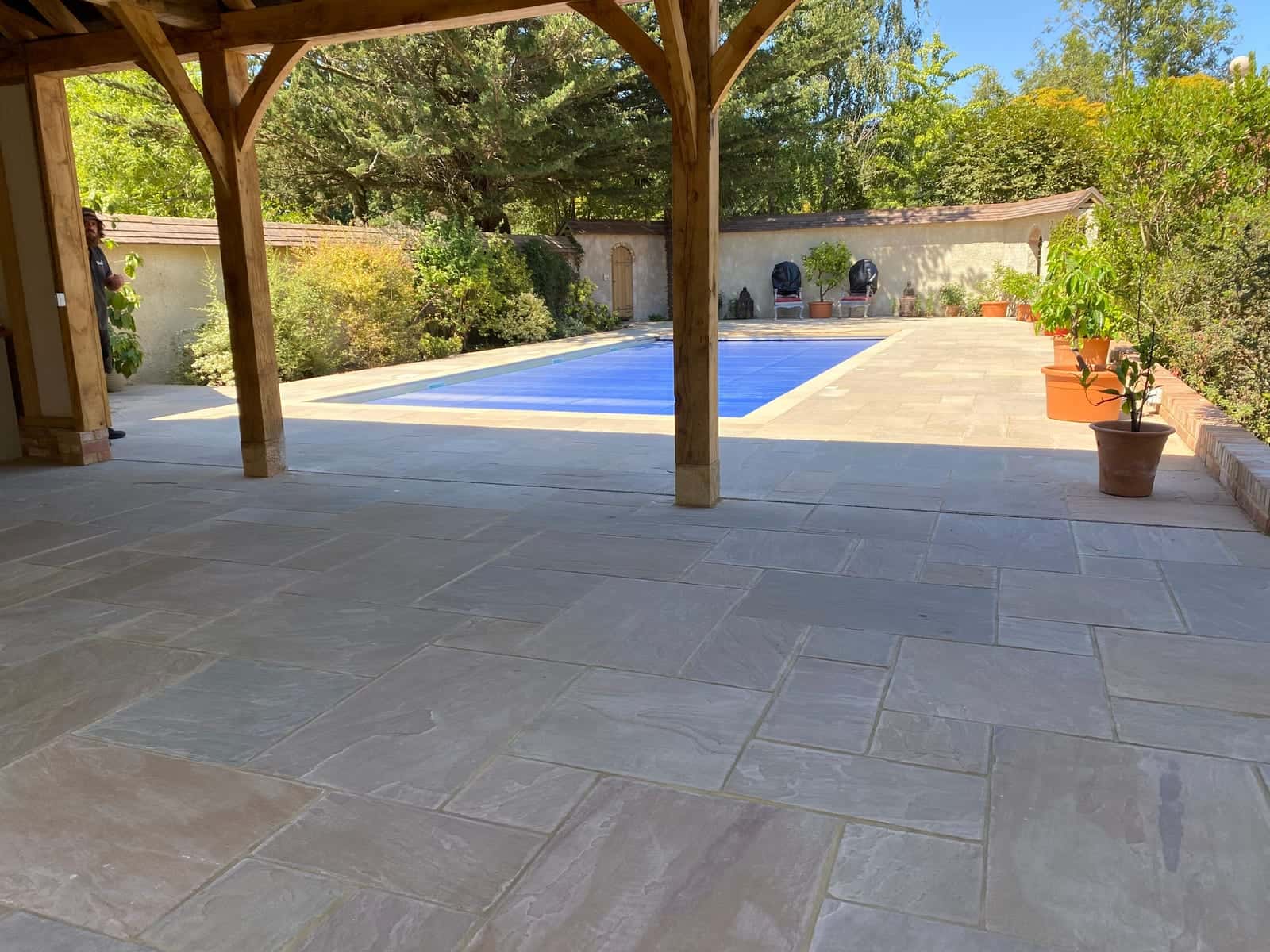
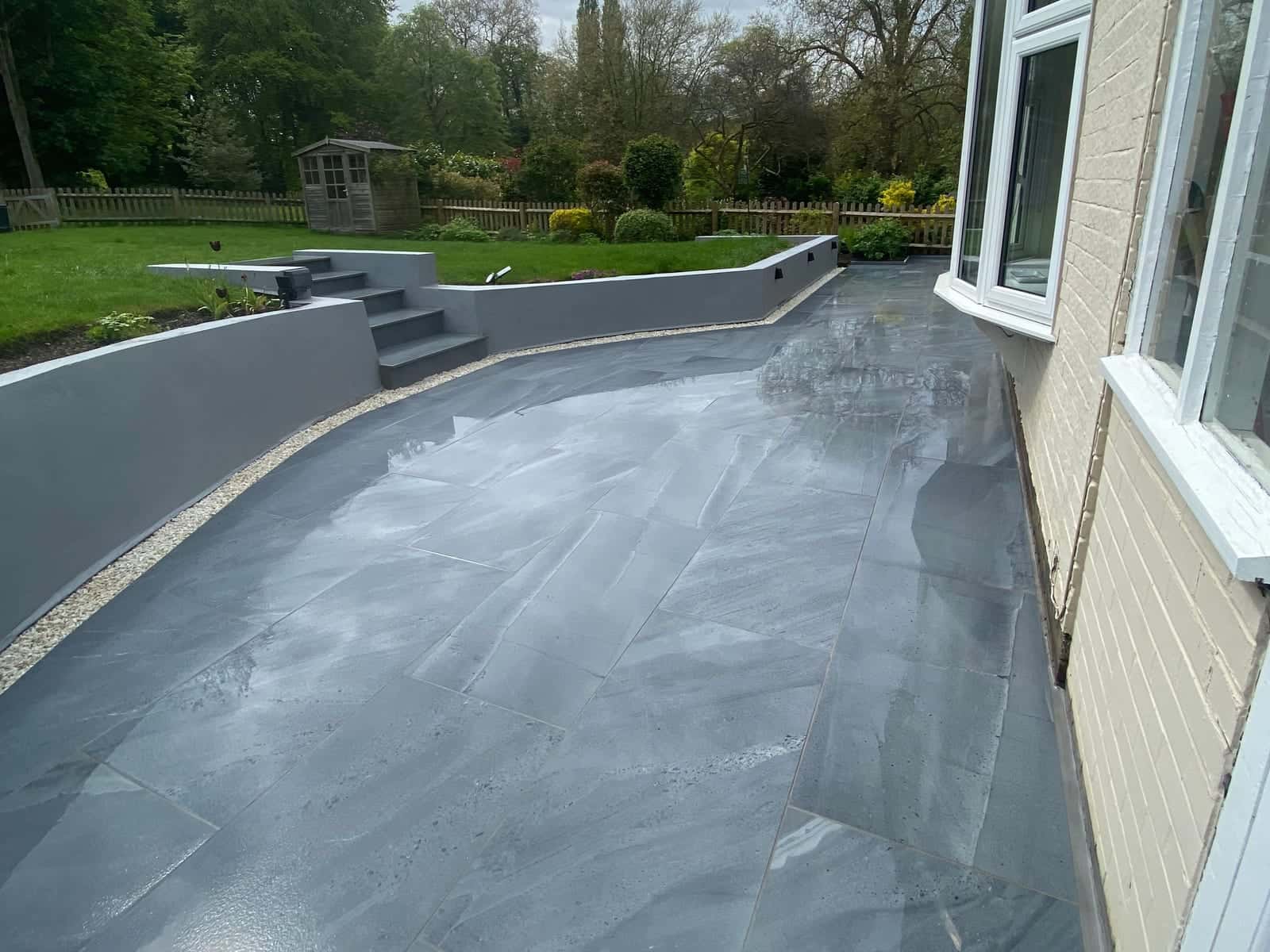
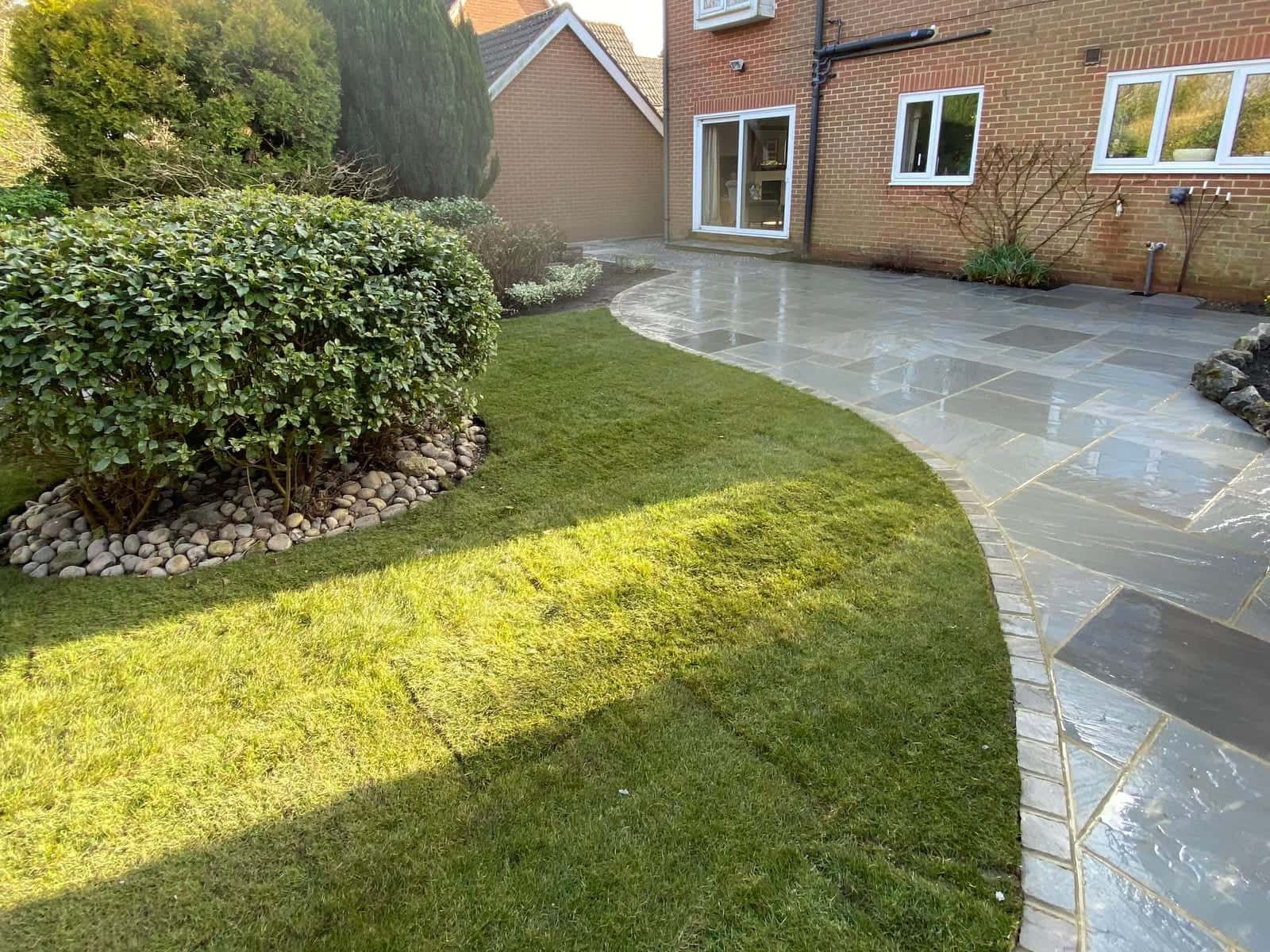
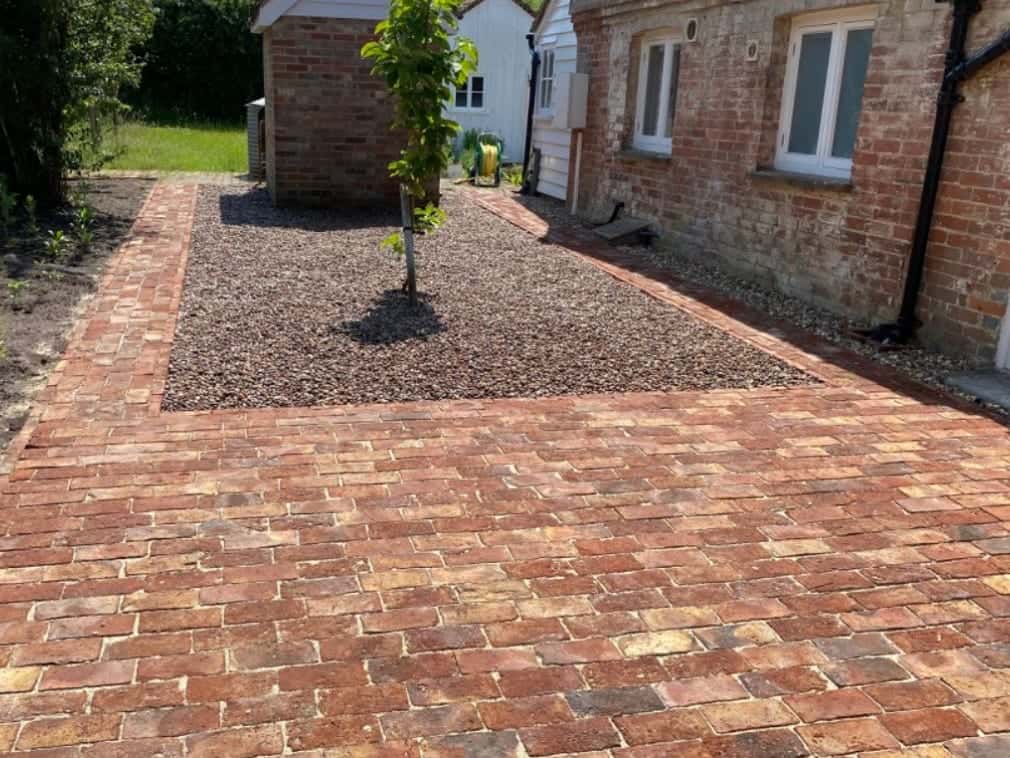
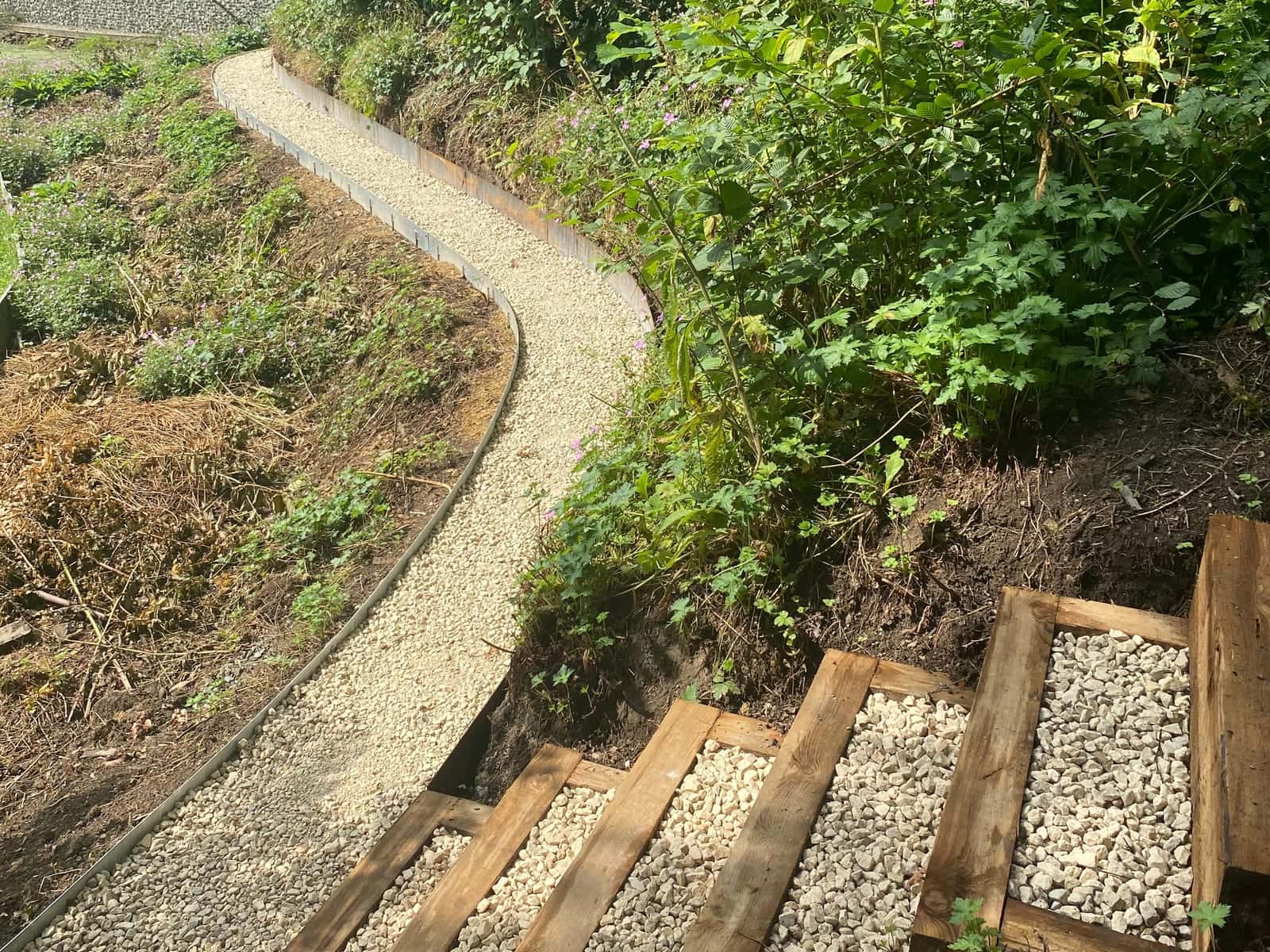
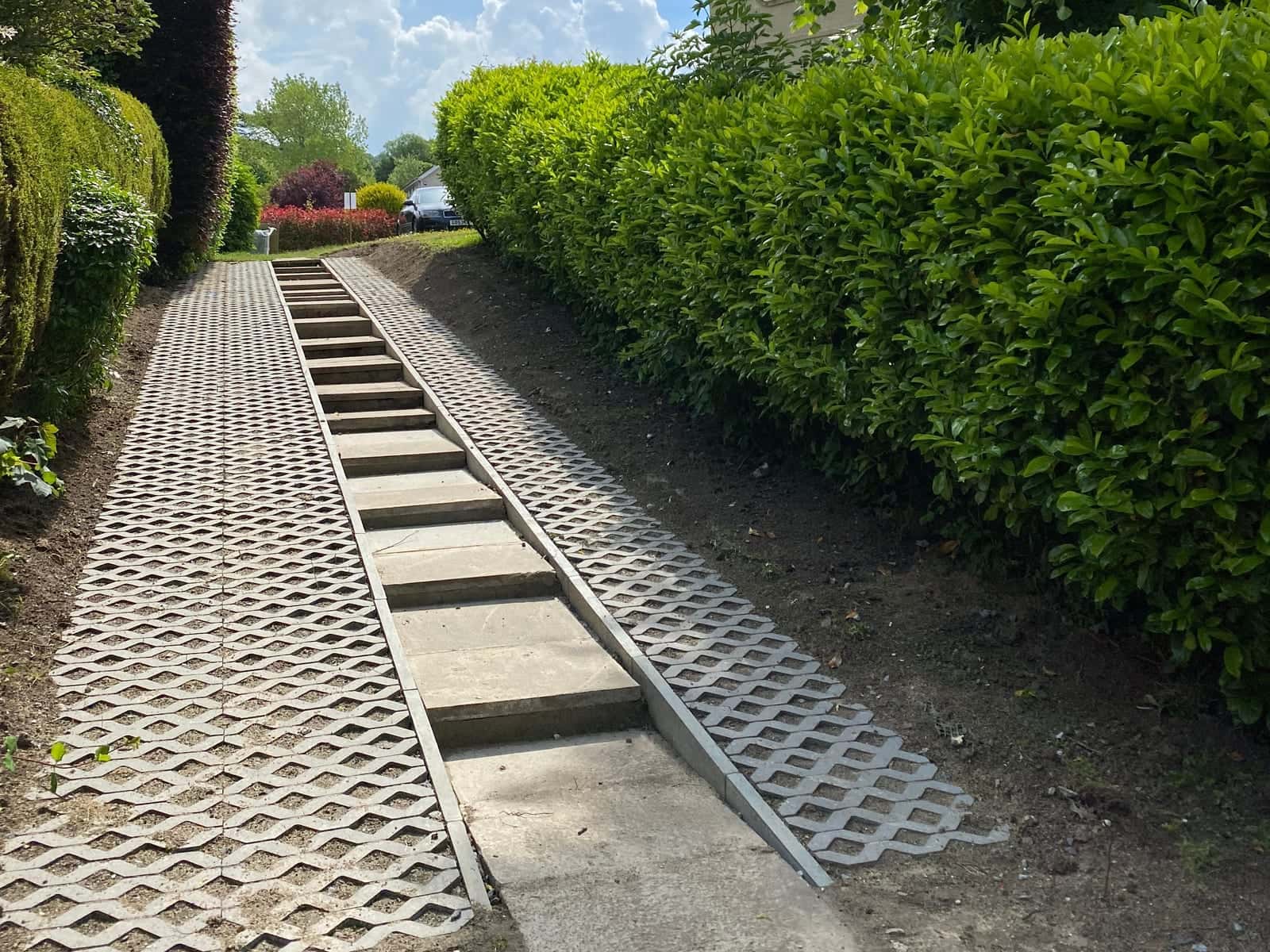
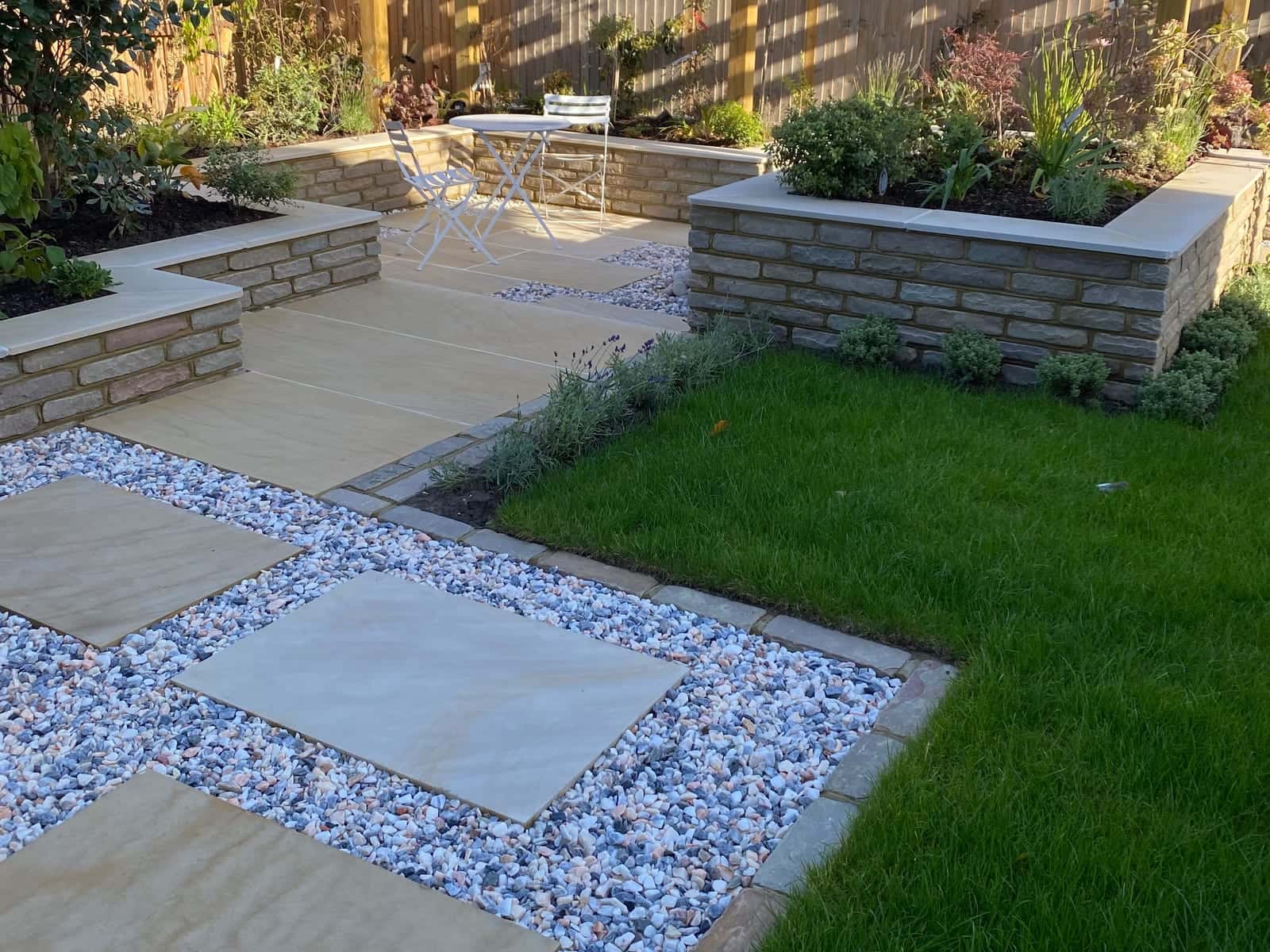
Recent work, photographed by the team on the job.
Real transformations
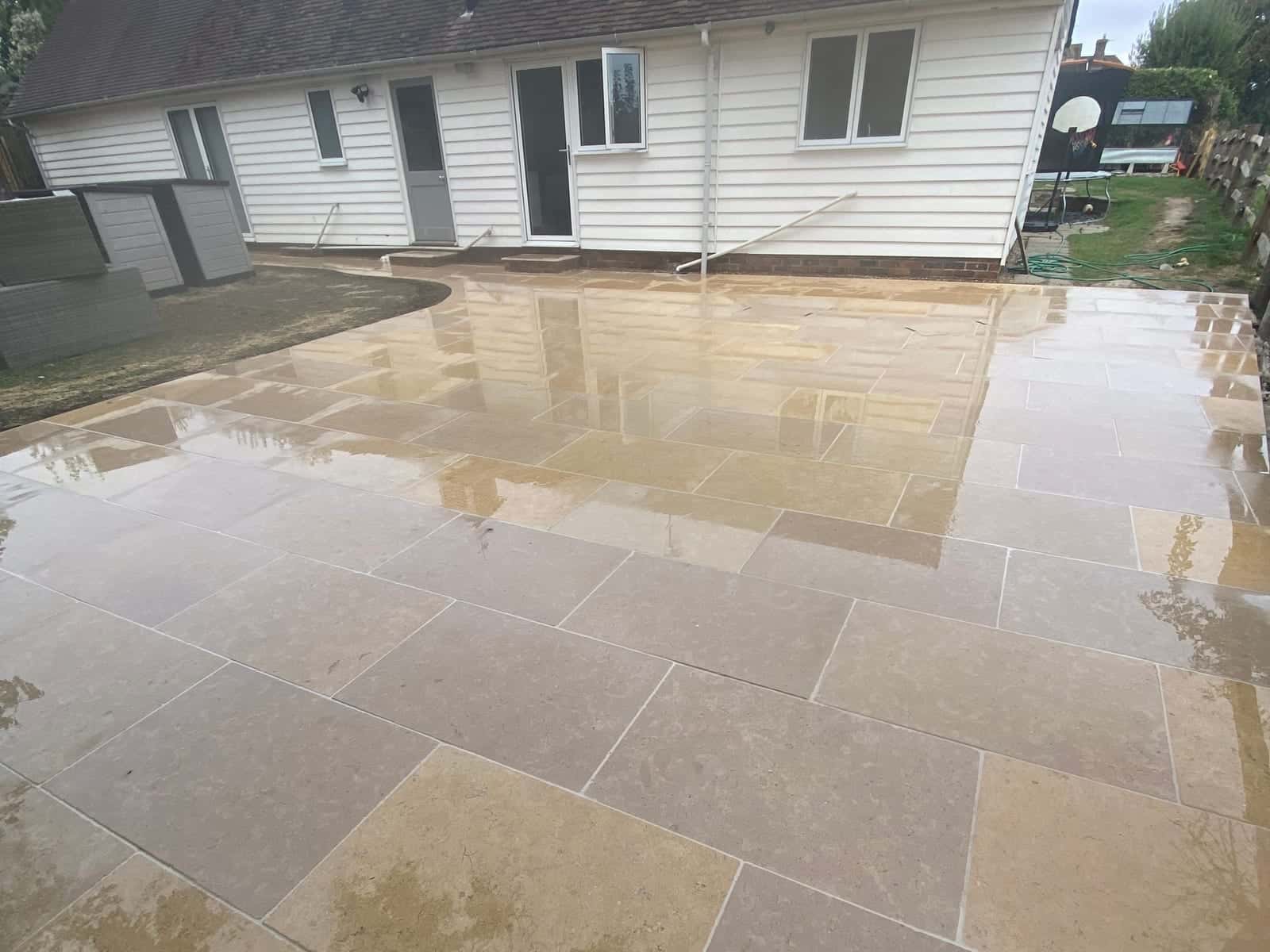
Before and after a terrace.
Sub-base down and the new wall going up, then the finished terrace outside the same doors. Drag the handle to compare.


Common questions
Questions we get about hard landscaping and groundworks.
Why does paving sink?
Almost always an inadequate base, or no fall so water sits and washes the sub-base out. Rebuilding the surface without fixing the base just repeats the problem.
Do I need planning permission?
Usually not for a patio, but front gardens, large impermeable areas and listed or conservation properties have their own rules. We will flag it if we think it applies and point you at the council.
How long does a patio take?
Typically one to three weeks depending on size, access and how much digging out is involved. Groundwork is the variable, not the laying.
Can you work around access problems?
Usually. Narrow access means barrowing and more labour rather than machines, which we price in rather than discovering halfway through.
How quickly will I hear back?
We reply to enquiries the same working day. A site visit is usually within the same week. We look at the property before quoting anything.
Areas served
From Ashford to Sevenoaks and the towns and villages in between.
- Tenterden
- Hawkhurst
- Ashford
- Tunbridge Wells
- Sevenoaks
If you are just outside this list, ask: we travel further for larger grounds and regular contracts.
Thinking about a patio, wall or level change?
Tell us what the space is doing wrong. We will come and look at the ground before quoting.