
Why is early autumn usually the best time?
New turf has one job in its first few weeks: to send roots down into the soil beneath it. That happens fastest when the ground is warm and moist and the air is not hot enough to dry the turf out from above. From September into October, conditions across Kent usually line up well. The soil holds the summer's warmth, cooler days and heavier dews cut down on watering, and there is time for the lawn to knit together before growth slows for winter.
Turf laid in autumn also gets a long, gentle start. By the following spring it has rooted properly and is ready to take normal use as soon as the grass starts growing again.
Is spring a good alternative?
Yes. Once the ground has started to warm up and has dried enough to work, usually from around March, spring is the next best window. The grass is coming into growth, so turf roots quickly. The difference is what follows: autumn turf heads into cooler, wetter months, while spring turf heads into summer. A dry spell in April or May can catch a new lawn out, so spring turf usually needs more watering than autumn turf in its first weeks.
Can you lay turf in summer?
You can, but it takes commitment. In hot, dry weather new turf loses moisture quickly, and if it dries out before it has rooted it shrinks, the joins open up and patches can brown off. Summer turf needs watering every day in dry weather, sometimes more than once, and it should be laid as soon as it arrives rather than left rolled up in the sun. If you can water it properly, it will establish. If you are going to be away, or there is a hosepipe ban, it is better to wait.
What about winter?
Turf can be laid in mild winter weather and will sit in place quite happily, but it roots slowly until spring. The real limits are the ground conditions. Never lay turf on frozen soil, and avoid working ground that is waterlogged: walking and barrowing over wet soil compacts it, and compacted ground drains badly and roots poorly for years afterwards.
Does the soil in Kent make a difference?
It does, sometimes more than the calendar. Much of the Weald sits on heavy clay, which holds water in winter, sets hard in summer and is easily compacted when it is worked wet. On clay, the timing often comes down to waiting until the ground is workable: moist enough to cultivate, dry enough not to smear. Lighter, chalky ground on the North Downs drains quickly and warms up sooner in spring, but it dries out faster too, so watering matters more after laying.
How should the ground be prepared?
Preparation decides how good the lawn looks for years, whichever month it goes down in. The usual sequence is:
- Clear the old grass, weeds, stones and debris.
- Cultivate the soil, breaking up compaction, and work in topsoil or organic matter where the ground is poor.
- Level and firm the surface, raking out hollows so the finished lawn does not hold puddles.
- Rake a fine, even surface just before laying.
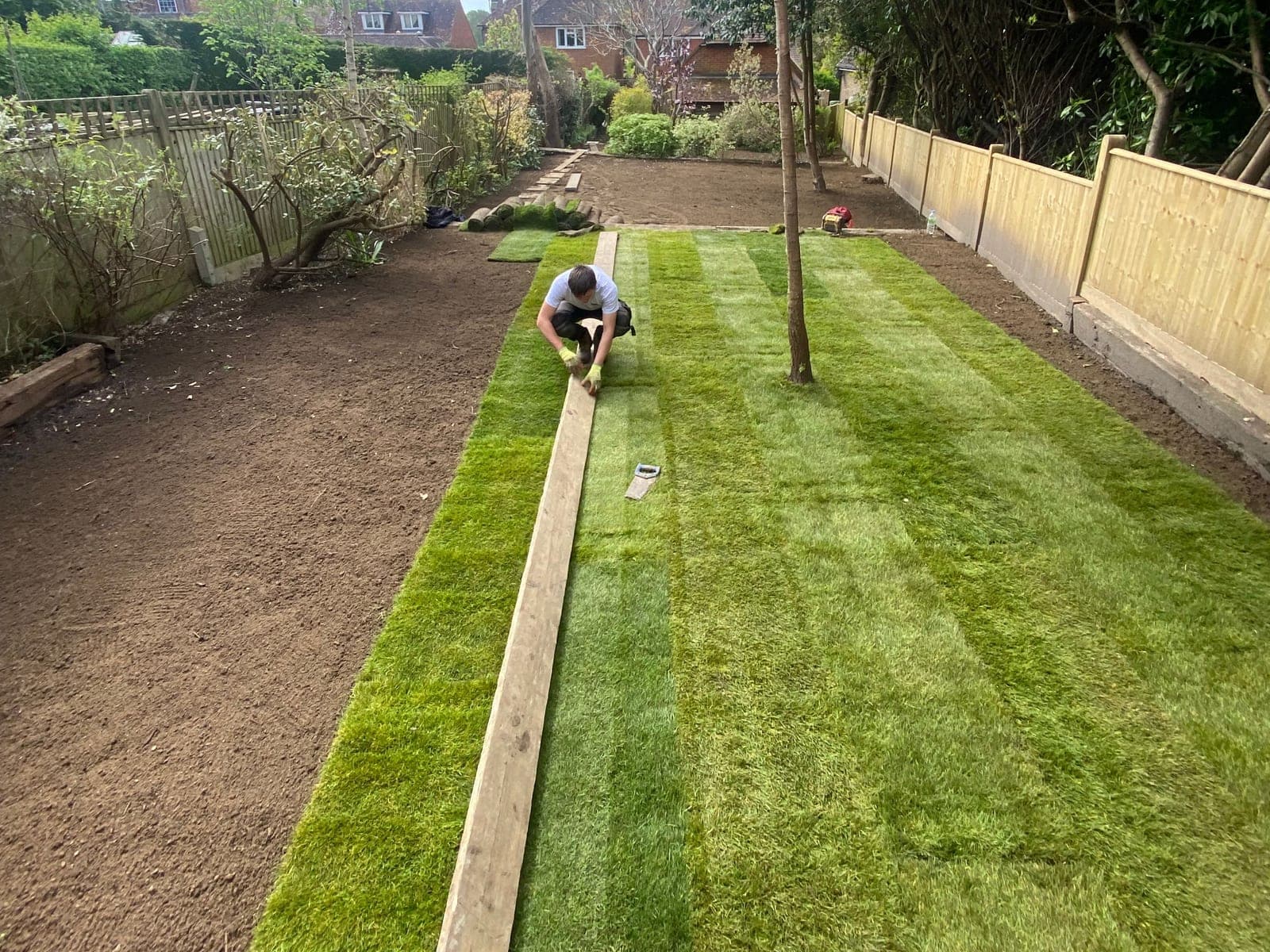
Turf is best laid on the day it is delivered, with the joins staggered like brickwork and butted up tight, working from boards so your weight does not dent the prepared soil.
How do you look after new turf in the first few weeks?
Water is the main thing. Soak the turf straight after laying, then keep it moist until it has rooted: daily in dry weather, less when it rains. To check, gently lift a corner. Once it resists, the roots are taking hold.
Keep foot traffic off as far as possible for the first few weeks. Give the first cut once the grass is growing and the turf has rooted, with the mower set high so it only takes the tips off, then lower the height gradually over the following cuts.